Latent Load & Moisture Control
Humidity engineering for Space Coast buildings that must control moisture—not just temperature—through a long, wet cooling season.
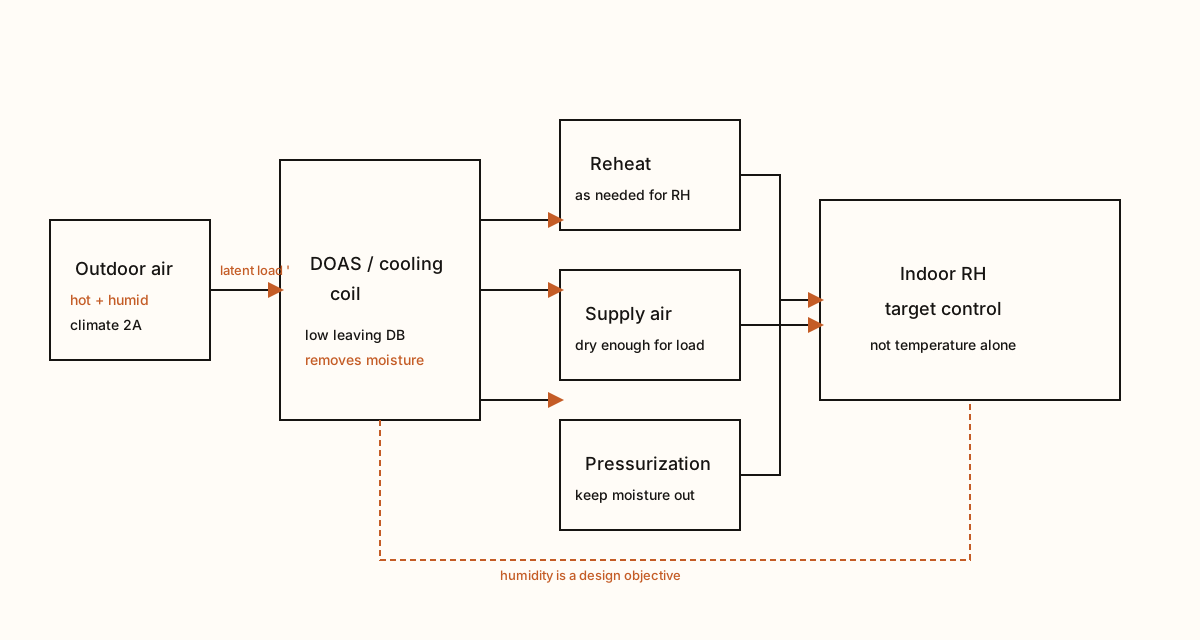
In ASHRAE climate zone 2A, humidity is a primary mechanical load. Outdoor air arrives hot and wet. Occupants and processes add moisture. If cooling systems are sized or controlled only for temperature, indoor relative humidity rises, materials suffer, and indoor air quality declines. Indian River Mechanical Engineering treats humidity as an explicit design objective: ventilation air treatment, coil leaving-air temperatures, reheat, dedicated dehumidification, and building pressure. This matters in healthcare, education, hospitality, museums, and any tightly built commercial space on the Indian River Lagoon or Atlantic side of Brevard County.
Overview
What humidity management engineering is
Engineering of dehumidification and humidity-control strategies for commercial, institutional, and industrial buildings, coordinated with cooling, ventilation, and building pressurization.
Applications
What we actually do
Latent load analysis
Separating sensible and latent loads so equipment and sequences can actually dehumidify.
DOAS and dedicated dehumidification
Treating outdoor air before it enters occupied space.
Existing-building moisture diagnosis
Finding whether the problem is ventilation, coil temperature, infiltration, or controls.
Material and process protection
Spaces that need humidity limits for equipment, collections, or healthcare.
Systems
Systems and solutions
Cooling-coil dehumidification with reheat
The most common commercial approach when properly sequenced.
Dedicated outdoor air dehumidification
DOAS units with cooling and moisture removal independent of space thermostats.
Desiccant systems
Used for demanding latent loads or low humidity targets.
Pressurization and envelope coordination
Keeping humid outdoor air from leaking into negatively pressurized buildings.
Buildings
Building types
- Healthcare and outpatient clinics
- Schools and universities
- Hospitality
- Historic and waterfront commercial buildings
- Laboratories and controlled storage
Problems
Problems this service solves
Musty interiors and condensation
Supply diffusers sweating, ceiling stains, or chronic odor in a cooled building.
Occupied spaces that feel clammy at 74°F
Temperature is controlled; moisture is not.
Outdoor-air units that dump humidity inside
Ventilation added for code or IAQ without latent treatment.
Operators disabling reheat to save energy
A sequence problem that returns as a moisture problem.
Engineering
Engineering considerations
- Space Coast design days are high wet-bulb events; peak latent load may not coincide with peak sensible load.
- Overcooling without reheat creates comfort complaints; raising the thermostat without dehumidification creates mold risk.
- Building pressure relative to outdoors is a humidity-control device.
- Part-load operation is when many systems stop dehumidifying—variable equipment and controls must address this.
- Envelope leaks, unconditioned plenums, and return-air paths can overwhelm an otherwise adequate HVAC system.
Related services
- Air Conditioning
Engineering of commercial and institutional air-conditioning systems for cooling, humidity control, and occupant comfort in Brevard County buildings.
- Ventilation
Commercial ventilation engineering: outdoor air, exhaust, pressurization, and distribution for Brevard County buildings that must bring in humid air without losing control of the interior.
- Indoor Air Quality
Indoor air quality engineering for commercial and institutional buildings: ventilation, filtration, humidity, and contaminant control grounded in mechanical systems—not consumer purifiers.
- Heating
Commercial heating engineering for Space Coast buildings that still need reliable heat, reheat, and domestic-related mechanical coordination despite a cooling-dominated climate.
- Building Automation
Building automation engineering that connects HVAC equipment, sensors, and sequences so Space Coast facilities operate as designed.
Locations
This service is available across Brevard County and the Orlando / Central Florida market. Place pages and approved service-location combinations are linked below.
- Humidity Management context in Melbourne, FL
- Humidity Management context in Palm Bay, FL
- Humidity Management context in Viera, FL
- Humidity Management context in Rockledge, FL
- Humidity Management context in Cocoa, FL
- Humidity Management context in Titusville, FL
- Humidity Management context in Orlando, FL
- Humidity Management context in Lake Nona, FL
- Humidity Management context in Lake Mary, FL
- Humidity Management context in Winter Park, FL
- Humidity Management context in Winter Garden, FL
- Humidity Management context in Kissimmee, FL
- Humidity Management context in Sanford, FL
Questions
Humidity Management FAQs
Why is humidity management a mechanical engineering issue in Brevard County?
The climate is hot and humid for much of the year. Outdoor air and infiltration bring large latent loads. Controlling temperature alone does not keep indoor moisture within a healthy or durable range.
What does a mechanical engineer do to control humidity?
The engineer calculates latent loads, selects coils or dedicated dehumidification, designs outdoor-air treatment, specifies reheat where needed, and writes control sequences and pressurization strategy.
When does a building need dedicated humidity engineering?
When there are moisture complaints, when ventilation rates are high, when the building is near the coast or lagoon, or when healthcare, education, or materials require humidity limits.
How does humidity control interact with air conditioning and ventilation?
Ventilation often dominates latent load. Air-conditioning coils must run cold enough, long enough, to remove moisture. Heating/reheat then restores comfortable temperature.
What should a building owner consider?
Do not treat mold or clammy rooms as a cleaning problem first. Measure indoor humidity, look at outdoor-air operation, and have the HVAC sequence reviewed before replacing equipment like-for-like.
Discuss your project with an engineer.
Tell us about the building, the system, and the constraint. We will follow up with the right next step—not a sales script.