Commercial Heating Systems
Heating engineering for Florida buildings that still need it—reheat, morning warmup, process heat, and resilient heating water—not a northern boiler catalog.
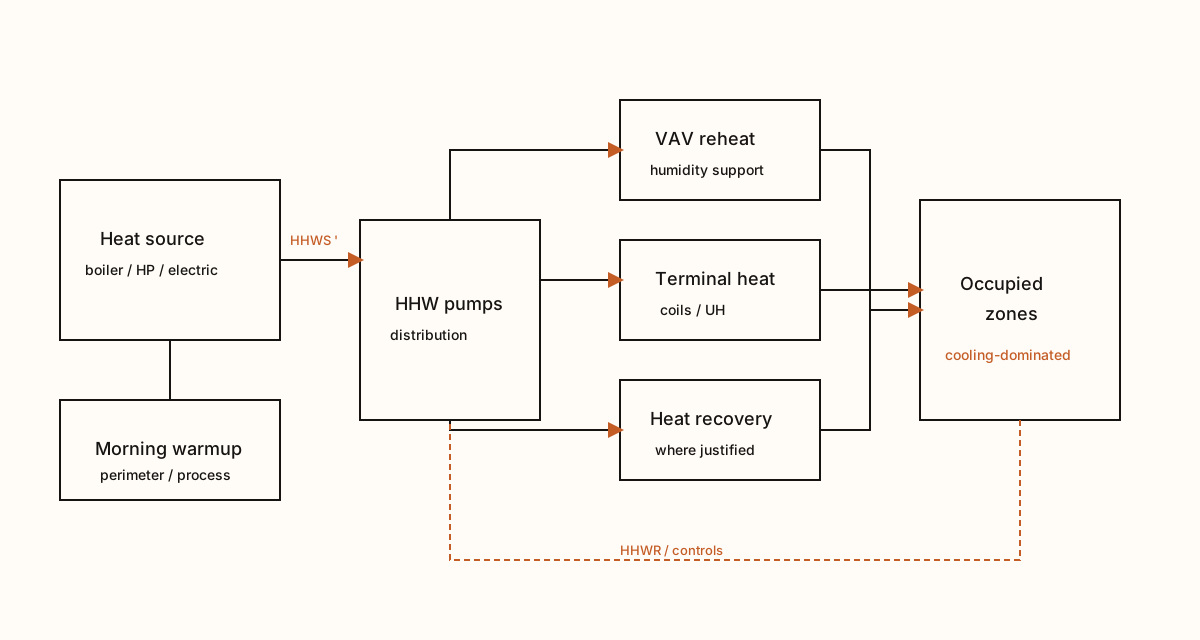
Brevard County is cooling-dominated, but commercial buildings still need heating. Morning warmup, perimeter zones, hospitals, laboratories, humidity control via reheat, and some industrial processes all require a designed heating strategy. Treating heating as an afterthought produces either oversized electric resistance or boilers that never run efficiently. Indian River Mechanical Engineering designs heating as part of the mechanical system: source, distribution, terminal devices, and controls. The goal is enough heat, in the right places, without fighting the cooling system for eight months of the year.
Overview
What heating engineering is
Engineering of heating systems for commercial, institutional, and industrial facilities, including reheat, heating water, heat pumps, and integration with humidity control and central plants.
Applications
What we actually do
Heating water and terminal heating
Boilers or heat-pump heating plants serving VAV reheat, radiant, or unit heaters where appropriate.
Reheat for humidity control
Coordinated cooling and reheat so indoor humidity can be controlled without freezing occupants.
Electrification and heat-pump heating
Evaluating air-source or ground-source heat pumps against electric resistance and fossil-fuel boilers.
Renovation of aging heating systems
Replacing failed boilers, steam remnants, or electric heat with a documented basis of design.
Systems
Systems and solutions
Hot-water boilers and condensing plants
Right-sized for Florida heating loads rather than copied from colder climates.
Heat-recovery chillers
Capturing condenser heat for reheat or domestic uses in cooling-dominated plants.
VAV reheat and perimeter heating
Zone-level heating that supports comfort and dehumidification.
Electric and heat-pump terminals
Used where hydronic heating is not justified, with attention to electrical service and control.
Buildings
Building types
- Healthcare and laboratories
- Education facilities
- Government buildings
- Hospitality
- Industrial process and hangar-adjacent spaces
Problems
Problems this service solves
Cold rooms on winter mornings
Underheated perimeter zones after overnight setback, even in a mild climate.
Humidity control that overcools people
Cooling coils running without a reheat strategy.
Oversized boilers with poor efficiency
Equipment selected as if the building were in a heating-dominated climate.
Conflicting heating and cooling
Simultaneous operation caused by poor zoning or controls.
Engineering
Engineering considerations
- Design heating loads on the Space Coast are small compared with cooling, but they are not zero—especially in healthcare and education.
- Reheat is often a humidity-control tool, not a comfort luxury.
- Heat recovery from chillers can supply much of a building’s heating water during the cooling season.
- Fuel choice, electrification, and emergency power affect heating source selection.
- Heating must be sequenced in the BAS so it does not fight cooling.
Related services
- Air Conditioning
Engineering of commercial and institutional air-conditioning systems for cooling, humidity control, and occupant comfort in Brevard County buildings.
- Central Plants
Engineering of central heating and cooling plants for campuses, healthcare, and larger commercial facilities on the Space Coast.
- Ground Source Heat Pumps
Ground-source heat pump engineering for commercial and institutional buildings where site conditions and energy goals support geothermal HVAC.
- Humidity Management
Humidity management engineering for commercial buildings in Brevard County’s hot-humid climate, where moisture control is a design problem, not a thermostat setting.
- Building Automation
Building automation engineering that connects HVAC equipment, sensors, and sequences so Space Coast facilities operate as designed.
- Chilled Water
Chilled-water system engineering for commercial and institutional cooling plants, distribution, and air-handling on the Space Coast.
Locations
This service is available across Brevard County and the Orlando / Central Florida market. Place pages and approved service-location combinations are linked below.
- Heating context in Melbourne, FL
- Heating context in Palm Bay, FL
- Heating context in Viera, FL
- Heating context in Rockledge, FL
- Heating context in Cocoa, FL
- Heating context in Titusville, FL
- Heating context in Orlando, FL
- Heating context in Lake Nona, FL
- Heating context in Lake Mary, FL
- Heating context in Winter Park, FL
- Heating context in Winter Garden, FL
- Heating context in Kissimmee, FL
- Heating context in Sanford, FL
Questions
Heating FAQs
Do commercial buildings in Brevard County need heating systems?
Yes. Occupied buildings need warmup, perimeter comfort on cool mornings, and often reheat for humidity control. Healthcare, education, and some industrial spaces have additional heating requirements.
What does a mechanical engineer do related to heating?
The engineer calculates heating loads, selects sources and distribution, coordinates reheat with cooling and ventilation, and writes control sequences so heating does not operate against cooling.
What heating systems are typical in Space Coast commercial buildings?
Hot-water reheat, heat-recovery chillers, heat pumps, and in some cases electric heat. Large steam plants are uncommon for new commercial work here.
How does heating interact with humidity management?
Dehumidification often requires cooling air below a comfortable temperature, then reheating it. Without engineered reheat, operators raise cooling setpoints and lose moisture control.
Should owners electrify heating in Florida?
It depends on electrical service, heat-pump performance, emergency power, and whether heat recovery from the cooling plant can meet most of the annual heating need. The decision should be engineered, not assumed.
Discuss your project with an engineer.
Tell us about the building, the system, and the constraint. We will follow up with the right next step—not a sales script.