Campus & Facility Infrastructure
Central plant engineering for facilities that need reliable, efficient heating and cooling infrastructure—not a collection of disconnected rooftop units.
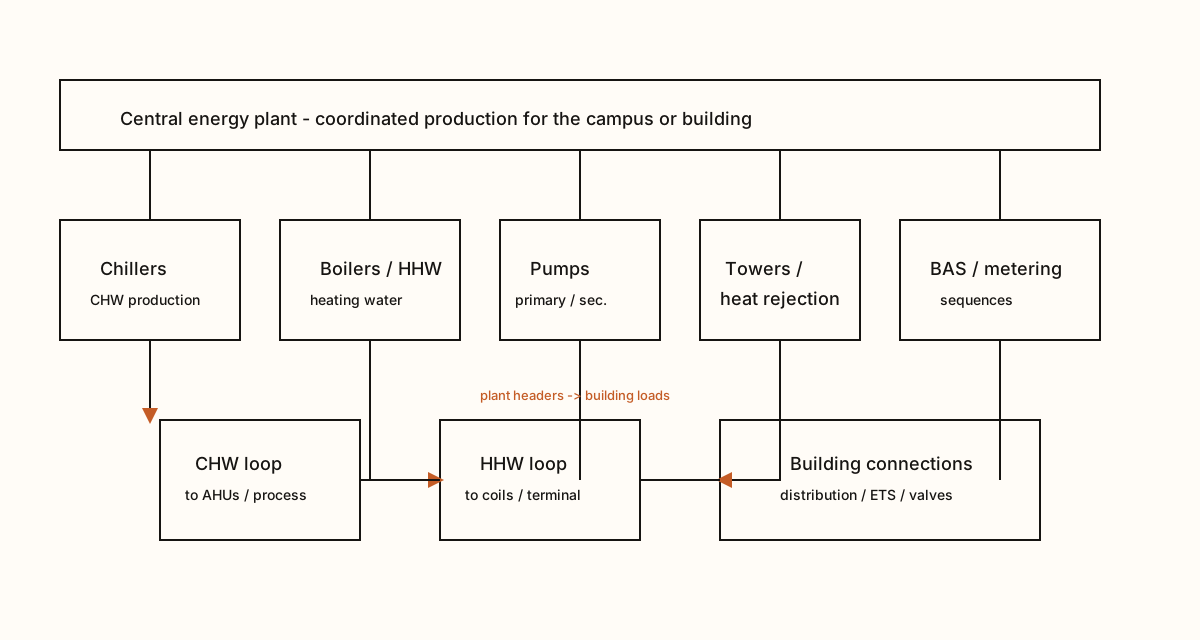
A central plant produces heating and cooling for multiple buildings or a large single facility through coordinated chillers, boilers or heat recovery, pumps, and distribution. It is the backbone of hospitals, campuses, industrial sites, and larger civic or commercial developments. Indian River Mechanical Engineering designs and evaluates central plants as infrastructure: capacity, redundancy, hydronic layout, controls, and future expansion. In Brevard County, plants must handle long cooling seasons, high wet-bulb conditions, hurricane preparedness, and owners who cannot take a hospital, lab, or production line offline casually.
Overview
What central plants engineering is
Central plant mechanical engineering covering chilled-water production, heating water, pumping, distribution, redundancy, and integration with thermal storage and building automation.
Applications
What we actually do
New plant design
Chiller and heating plant configuration, hydronic distribution, equipment rooms, and outdoor heat rejection.
Plant expansion and replacement
Phased replacement of aging chillers, pumps, and towers while keeping occupied buildings in operation.
Campus distribution
Primary-secondary or variable-primary pumping, piping routing, and building interconnects.
Resilience planning
N+1 equipment, emergency power coordination, and storm-related operational strategies.
Systems
Systems and solutions
Water-cooled and air-cooled chiller plants
Selected based on capacity, water availability, noise, and maintenance capability.
Heating plants and heat recovery
Boilers, heat-recovery chillers, and low-temperature heating water where appropriate.
Pumping and hydronic distribution
Variable-speed pumping, decoupling, and building connections that remain stable at part load.
Cooling towers and heat rejection
Tower selection, water treatment coordination, and coastal corrosion considerations.
Buildings
Building types
- Hospitals and medical campuses
- Higher education and large K-12 campuses
- Government complexes
- Industrial and aerospace facilities
- Mixed-use and large commercial developments
Problems
Problems this service solves
Aging plants with no remaining redundancy
Single points of failure that put occupied buildings at risk during equipment outages.
Poor part-load efficiency
Oversized constant-speed equipment that wastes energy most of the year.
Hydronic imbalance across buildings
Some buildings starved for flow while others overflow, creating comfort and control problems.
No documented path for growth
A new wing or building added without plant capacity, electrical service, or piping strategy.
Engineering
Engineering considerations
- Redundancy should match the facility’s risk: healthcare and process loads are not the same as an office.
- High wet-bulb temperatures on the Space Coast affect cooling-tower and water-cooled plant performance.
- Plant design must include water treatment, freeze protection where needed, and service access.
- Emergency power, flood elevation, and wind-borne debris criteria belong in plant siting decisions.
- Thermal storage, heat recovery, and BAS staging can change plant size and operating cost more than swapping brands.
Related services
- Chilled Water
Chilled-water system engineering for commercial and institutional cooling plants, distribution, and air-handling on the Space Coast.
- Thermal Storage
Thermal energy storage engineering that shifts cooling production in time, reducing peak demand on Space Coast chilled-water plants.
- Heating
Commercial heating engineering for Space Coast buildings that still need reliable heat, reheat, and domestic-related mechanical coordination despite a cooling-dominated climate.
- Building Automation
Building automation engineering that connects HVAC equipment, sensors, and sequences so Space Coast facilities operate as designed.
- Air Conditioning
Engineering of commercial and institutional air-conditioning systems for cooling, humidity control, and occupant comfort in Brevard County buildings.
- Ground Source Heat Pumps
Ground-source heat pump engineering for commercial and institutional buildings where site conditions and energy goals support geothermal HVAC.
Locations
This service is available across Brevard County and the Orlando / Central Florida market. Place pages and approved service-location combinations are linked below.
- Central Plants context in Melbourne, FL
- Central Plants context in Palm Bay, FL
- Central Plants context in Viera, FL
- Central Plants context in Rockledge, FL
- Central Plants context in Cocoa, FL
- Central Plants context in Titusville, FL
- Central Plants context in Orlando, FL
- Central Plants context in Lake Nona, FL
- Central Plants context in Lake Mary, FL
- Central Plants context in Winter Park, FL
- Central Plants context in Winter Garden, FL
- Central Plants context in Kissimmee, FL
- Central Plants context in Sanford, FL
Questions
Central Plants FAQs
What is a central plant in mechanical engineering?
A central plant is a coordinated heating and cooling production facility—typically chillers, heat rejection, pumps, and often boilers—that serves one large building or a campus of buildings through hydronic distribution.
When does a project need a central plant instead of packaged HVAC?
When multiple buildings share a site, when cooling loads are large or diverse, when redundancy is required, or when energy and maintenance goals favor centralized equipment over many rooftop units.
What buildings on the Space Coast typically use central plants?
Hospitals, college campuses, larger government facilities, industrial sites, and major mixed-use developments. Melbourne’s healthcare and education core and Titusville’s industrial growth are typical examples.
What are major design considerations for a central plant?
Capacity and diversity, redundancy, hydronic configuration, electrical service, heat rejection, water treatment, controls, expandability, and site constraints including wind, flood, and maintenance access.
How do central plants interact with chilled water and thermal storage?
The plant produces chilled and heating water. Thermal storage can shift production in time, reducing peak electrical demand and changing how chillers are staged.
Discuss your project with an engineer.
Tell us about the building, the system, and the constraint. We will follow up with the right next step—not a sales script.