Chilled Water Engineering
Chilled-water engineering for buildings that need central cooling infrastructure: hospitals, campuses, plants, and larger commercial facilities in Brevard County.
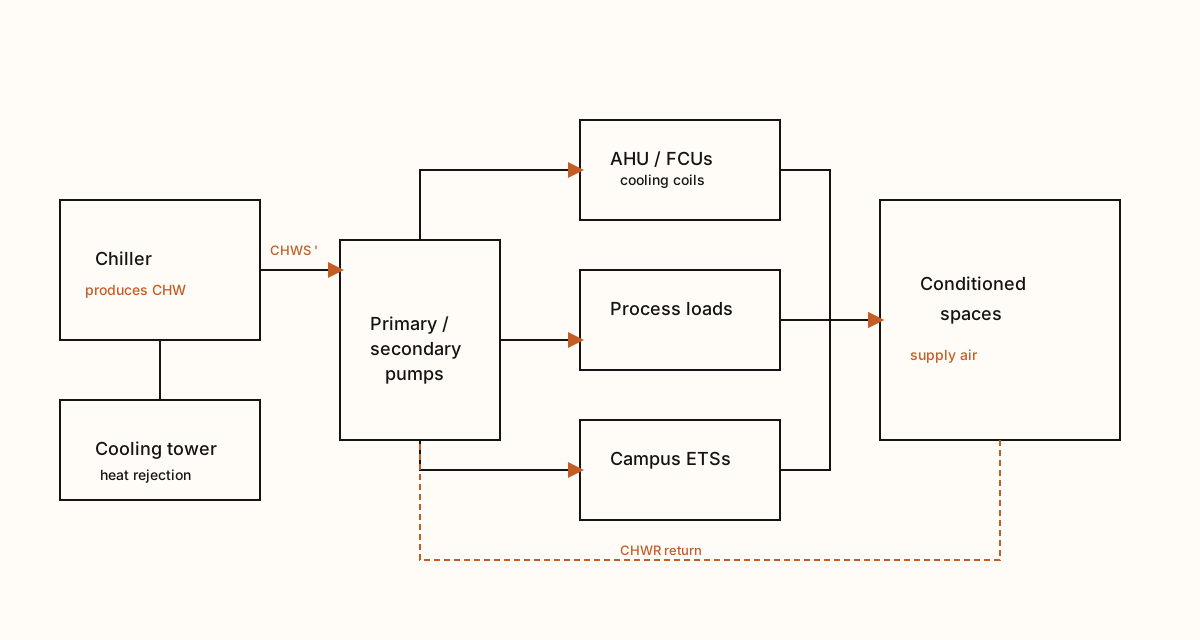
Chilled-water systems produce cold water at a central plant and distribute it to air handlers, fan-coil units, process loads, and sometimes thermal storage. They are the standard approach for larger commercial, healthcare, education, and industrial facilities because they concentrate cooling production, support redundancy, and allow flexible air-side systems. Indian River Mechanical Engineering designs chilled-water systems as a complete hydronic problem: temperatures, flow, pressure, control valves, and part-load operation. On the Space Coast, chilled water is not a specialty add-on. It is how many of the region’s most important buildings stay cool through a long, humid cooling season.
Overview
What chilled water engineering is
Engineering of chilled-water systems including chiller selection, hydronic distribution, water temperatures, pumping, and integration with air handlers, thermal storage, and building automation.
Applications
What we actually do
Chilled-water plant design
Chiller type, configuration, evaporator and condenser flow, and heat rejection.
Distribution and building connections
Piping, pumping, isolation, and energy-transfer stations for campuses or large buildings.
Low-temperature and conventional water strategies
Selecting supply temperatures that support dehumidification, energy use, and existing coils.
Existing-system evaluation
Delta-T problems, bypassed valves, undersized pumps, and plants that cannot meet humidity loads.
Systems
Systems and solutions
Water-cooled centrifugal and screw chillers
Typical for larger plants with cooling towers and available condenser water systems.
Air-cooled chillers
Used where water use, maintenance, or siting makes towers impractical.
Variable-primary and primary-secondary pumping
Hydronic arrangements selected for the plant’s size, diversity, and operator preference.
Process chilled water
Separate or combined loops for industrial, laboratory, or aerospace support loads.
Buildings
Building types
- Hospitals and medical campuses
- Higher education
- Large commercial and mixed-use
- Government complexes
- Industrial and aerospace facilities
Problems
Problems this service solves
Low delta-T and overflowing plants
Coils and valves that return water too cold, forcing extra chiller operation.
Insufficient cooling on peak humid days
Plants sized on sensible load only, or coils that cannot dehumidify.
Unreliable distribution to remote buildings
Pressure and flow problems across a campus loop.
No strategy for adding load
A new wing connected without checking plant, pump, or pipe capacity.
Engineering
Engineering considerations
- Chilled-water temperature affects both energy use and latent (humidity) performance.
- Pumping energy is a first-order cost; variable flow must be designed, not added later as a drive on an oversized pump.
- Valve authority, coil selection, and control sequences determine whether the plant achieves design delta-T.
- Coastal corrosion, water treatment, and condenser-water quality affect long-term plant reliability.
- Thermal storage and BAS staging can change peak demand and chiller runtime more than a small efficiency rating difference.
Related services
- Central Plants
Engineering of central heating and cooling plants for campuses, healthcare, and larger commercial facilities on the Space Coast.
- Thermal Storage
Thermal energy storage engineering that shifts cooling production in time, reducing peak demand on Space Coast chilled-water plants.
- Air Conditioning
Engineering of commercial and institutional air-conditioning systems for cooling, humidity control, and occupant comfort in Brevard County buildings.
- Building Automation
Building automation engineering that connects HVAC equipment, sensors, and sequences so Space Coast facilities operate as designed.
- Heating
Commercial heating engineering for Space Coast buildings that still need reliable heat, reheat, and domestic-related mechanical coordination despite a cooling-dominated climate.
- Pre-Conditioned Air
Pre-conditioned air engineering for aviation, hangar, and specialized facilities that need external cooling air instead of running onboard or process systems continuously.
Locations
This service is available across Brevard County and the Orlando / Central Florida market. Place pages and approved service-location combinations are linked below.
- Chilled Water context in Melbourne, FL
- Chilled Water context in Palm Bay, FL
- Chilled Water context in Viera, FL
- Chilled Water context in Rockledge, FL
- Chilled Water context in Cocoa, FL
- Chilled Water context in Titusville, FL
- Chilled Water context in Orlando, FL
- Chilled Water context in Lake Nona, FL
- Chilled Water context in Lake Mary, FL
- Chilled Water context in Winter Park, FL
- Chilled Water context in Winter Garden, FL
- Chilled Water context in Kissimmee, FL
- Chilled Water context in Sanford, FL
Questions
Chilled Water FAQs
What is chilled-water engineering?
It is the design and analysis of systems that produce and distribute chilled water for building or process cooling, including chillers, pumps, piping, coils, and controls.
What does a mechanical engineer do on a chilled-water project?
The engineer defines water temperatures and flow, selects chillers and pumps, designs distribution, coordinates electrical and structural requirements, and specifies control sequences and commissioning tests.
When is a chilled-water system needed?
When cooling loads are large, diverse, or mission-critical; when multiple air handlers or buildings share a site; or when process cooling cannot be served reliably by packaged DX equipment.
What types of buildings use chilled-water systems?
Hospitals, campuses, large offices, government facilities, and industrial plants. In Brevard County this includes healthcare in Melbourne and Viera, education facilities, and aerospace-related industrial sites in Titusville and Palm Bay.
How does chilled water interact with other mechanical systems?
It is the cooling source for air conditioning and often for process loads. It pairs with central plants, thermal storage, heating (including heat recovery), and building automation. Pre-conditioned air systems at aviation facilities may also use chilled water.
Discuss your project with an engineer.
Tell us about the building, the system, and the constraint. We will follow up with the right next step—not a sales script.