Geothermal HVAC Engineering
Ground-source heat pump engineering that treats the ground loop as infrastructure—not a product brochure—and evaluates whether it actually fits a Space Coast site.
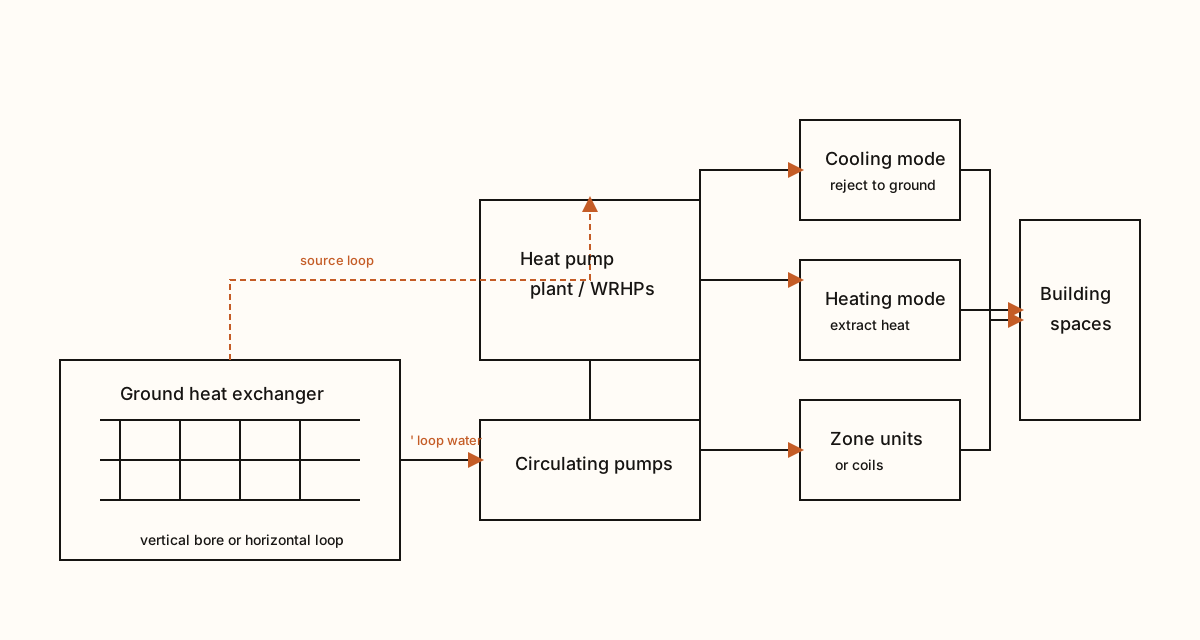
Ground-source heat pumps use the ground or a water body as a heat source and sink, typically through closed-loop piping connected to water-to-air or water-to-water heat pumps. They can reduce outdoor equipment, improve part-load efficiency, and support both heating and cooling. They are not automatically the right answer. Loop field space, drilling conditions, groundwater, building load imbalance, and first cost all matter. Indian River Mechanical Engineering evaluates GSHP as an engineering option alongside chilled-water plants, DX systems, and hybrid approaches. In Brevard County, cooling-dominated loads, high groundwater in some areas, and limited urban sites require honest analysis rather than geothermal marketing.
Overview
What ground source heat pumps engineering is
Engineering of ground-source (geothermal) heat pump systems, including ground-loop strategy, building heat-pump selection, hybrid plants, and integration with conventional HVAC.
Applications
What we actually do
Feasibility and load imbalance analysis
Determining whether a ground loop can reject the cooling-dominated load typical of Space Coast buildings.
Loop-field and building system design
Vertical or horizontal loops, interior heat pumps, pumping, and distribution.
Hybrid geothermal plants
Combining ground loops with cooling towers or supplemental heat rejection when annual loads are cooling-heavy.
Campus and school applications
Distributed heat pumps with a shared ground loop where land and phasing allow.
Systems
Systems and solutions
Closed-loop vertical bore fields
The most common commercial approach where land area is limited.
Horizontal loops
Used where excavation area is available and boring is less practical.
Water-to-air and water-to-water heat pumps
Zone-level or plant-level machines connected to the ground loop.
Hybrid rejection
Cooling towers or dry coolers that keep loop temperatures in range during peak Space Coast summers.
Buildings
Building types
- K-12 and higher-education buildings
- Civic and government facilities
- Commercial offices on sites with available land
- Healthcare outpatient buildings
- New master-planned developments
Problems
Problems this service solves
Limited roof or yard space for conventional equipment
Moving heat rejection into a loop field can free architectural and structural constraints.
High cooling energy use with a long season
Efficient heat-pump operation at part load, when the loop is correctly sized.
Owners exploring geothermal without a clear basis of design
A feasibility study that either supports GSHP or documents why a hybrid or conventional plant is better.
Engineering
Engineering considerations
- Florida buildings are cooling-dominated; untreated loop fields can heat up over time without hybrid rejection.
- Drilling conditions, utilities, and available land often govern feasibility more than equipment COP.
- Interior heat-pump maintenance access and acoustic criteria must be designed, not assumed.
- GSHP still requires ventilation, humidity control, and building automation.
- Life-cycle cost should include pumping energy, loop maintenance, and hybrid equipment—not only heat-pump efficiency.
Related services
- Heating
Commercial heating engineering for Space Coast buildings that still need reliable heat, reheat, and domestic-related mechanical coordination despite a cooling-dominated climate.
- Air Conditioning
Engineering of commercial and institutional air-conditioning systems for cooling, humidity control, and occupant comfort in Brevard County buildings.
- Central Plants
Engineering of central heating and cooling plants for campuses, healthcare, and larger commercial facilities on the Space Coast.
- Chilled Water
Chilled-water system engineering for commercial and institutional cooling plants, distribution, and air-handling on the Space Coast.
- Thermal Storage
Thermal energy storage engineering that shifts cooling production in time, reducing peak demand on Space Coast chilled-water plants.
- Humidity Management
Humidity management engineering for commercial buildings in Brevard County’s hot-humid climate, where moisture control is a design problem, not a thermostat setting.
Locations
This service is available across Brevard County and the Orlando / Central Florida market. Place pages and approved service-location combinations are linked below.
- Ground Source Heat Pumps context in Melbourne, FL
- Ground Source Heat Pumps context in Palm Bay, FL
- Ground Source Heat Pumps context in Viera, FL
- Ground Source Heat Pumps context in Rockledge, FL
- Ground Source Heat Pumps context in Cocoa, FL
- Ground Source Heat Pumps context in Titusville, FL
- Ground Source Heat Pumps context in Orlando, FL
- Ground Source Heat Pumps context in Lake Nona, FL
- Ground Source Heat Pumps context in Lake Mary, FL
- Ground Source Heat Pumps context in Winter Park, FL
- Ground Source Heat Pumps context in Winter Garden, FL
- Ground Source Heat Pumps context in Kissimmee, FL
- Ground Source Heat Pumps context in Sanford, FL
Questions
Ground Source Heat Pumps FAQs
What is a ground-source heat pump system?
It is an HVAC system that uses the ground as a thermal source and sink, typically through buried piping connected to heat pumps in the building. It provides heating and cooling without relying solely on outdoor air-source equipment.
Are geothermal heat pumps practical in Brevard County?
They can be, especially on sites with land for a loop field and owners focused on long-term energy use. Because local buildings are cooling-dominated, many projects need hybrid heat rejection and a careful imbalance analysis.
What does a mechanical engineer do on a GSHP project?
The engineer calculates loads, models loop temperatures, selects heat pumps and pumping, designs the building-side systems, and coordinates drilling, civil, and controls work.
When is GSHP not the right choice?
When land or drilling is constrained, when cooling imbalance cannot be managed, when first-cost and schedule cannot absorb loop installation, or when a central chilled-water plant better matches campus operations.
How does GSHP interact with other mechanical systems?
Heat pumps still serve air conditioning and heating. Ventilation, humidity, and automation remain required. Some projects combine GSHP with chilled-water distribution or thermal storage.
Discuss your project with an engineer.
Tell us about the building, the system, and the constraint. We will follow up with the right next step—not a sales script.